The exact words
What it meant in 1776
The Declaration of Independence was written to justify a break with Britain to the world, and its second paragraph sets out the philosophy behind that break. People have natural rights that no government grants and no government can take away; governments exist to protect those rights; and when a government destroys them, people may replace it. “All men are created equal” is the first step in that argument. It means that no one is born with a natural right to rule over others, which is a direct challenge to monarchy.
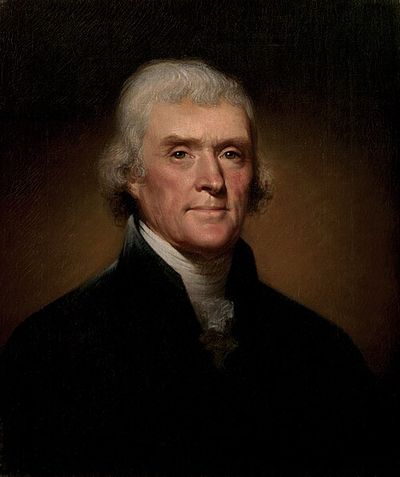
Jefferson drew on ideas common among educated colonists, especially the English philosopher John Locke, and on recent American documents such as George Mason’s draft of the Virginia Declaration of Rights. His own rough draft, which survives, called these truths “sacred & undeniable”; the final text says “self-evident.” The Committee of Five and then Congress made dozens of edits, including cutting Jefferson’s passage blaming the king for the slave trade.
The contradiction at its heart
The men who adopted the Declaration did not apply its words to everyone. Jefferson enslaved more than six hundred people over his lifetime, and so did many other signers. Women, Native Americans and men without property were excluded from political rights. Critics noticed at the time: the English writer Samuel Johnson asked in 1775 why “the loudest yelps for liberty” came from “the drivers of negroes.”
How later Americans used it
What makes the line so powerful is what came after. Abolitionists quoted it constantly. The women’s rights convention at Seneca Falls in 1848 rewrote it as “all men and women are created equal.” Frederick Douglass in 1852 asked what the Fourth of July meant to an enslaved person. Lincoln built the Gettysburg Address on it, and Martin Luther King Jr. called it a promissory note that America had failed to honor. Each of them used the founders’ own words to demand that the country live up to them, which is why the sentence matters more today than its authors intended.
What people get wrong
A statement that the founders believed in full equality for everyone, as we understand it today.
A claim about natural rights that its authors, many of them enslavers, applied narrowly. Its power came from later Americans who took the words more seriously than their authors did.
Timeline
- June 1776Congress appoints a Committee of Five to draft a declaration. Jefferson writes the first draft; John Adams and Benjamin Franklin suggest changes.
- July 4, 1776The Continental Congress adopts the final text after further edits, including the removal of a passage condemning the slave trade.
- 1848The Seneca Falls Declaration of Sentiments rewrites the line as “all men and women are created equal.”
- 1852Frederick Douglass asks “What to the slave is the Fourth of July?”, holding the nation to its own words.
- 1863Lincoln opens the Gettysburg Address by calling the nation “dedicated to the proposition that all men are created equal.”
- 1963Martin Luther King Jr. quotes the line in his “I Have a Dream” speech as a “promissory note” still unpaid.
Use it in a speech
Questions people ask
Who wrote “all men are created equal”?
Thomas Jefferson drafted the Declaration of Independence in June 1776. The Committee of Five, including John Adams and Benjamin Franklin, and then the full Continental Congress edited it before it was adopted on July 4, 1776.
Did the founders believe all people were equal?
They believed in equal natural rights in principle, but many of them, including Jefferson, enslaved people, and women and others were excluded from political rights. Later movements used the Declaration's own words to challenge those exclusions.
Is “all men are created equal” in the Constitution?
No. It is in the Declaration of Independence. The Constitution's equal protection clause was added in the Fourteenth Amendment in 1868.
Cite this quote
These cite the original source directly, so you can use them in an essay or paper. Always check your teacher's required style.