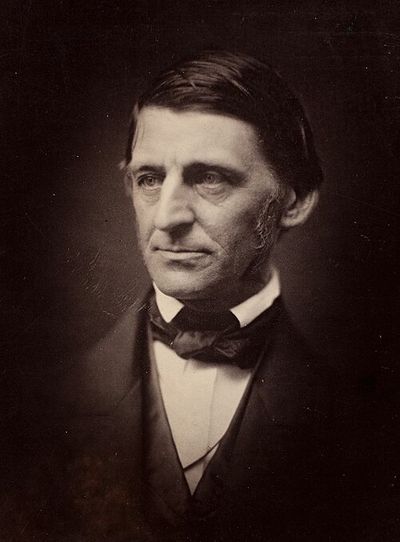
The exact words
“Rhodora! if the sages ask thee why This charm is wasted on the earth and sky, Tell them, dear, that if eyes were made for seeing, Then Beauty is its own excuse for being.”Ralph Waldo Emerson, The Rhodora, lines 9–12, in Poems (1847)
✓ VerifiedFound in a primary source: the original book, speech transcript, letter or recording.
What people get wrong
Common reading
An argument that art for art's sake needs no meaning at all.
An argument that art for art's sake needs no meaning at all.
Closer to the original
Emerson's next lines add a spiritual twist. He says the same power that brought him to the spot brought the flower there too. For him, beauty is its own excuse because it is a sign of the order in nature, not because it means nothing.
Emerson's next lines add a spiritual twist. He says the same power that brought him to the spot brought the flower there too. For him, beauty is its own excuse because it is a sign of the order in nature, not because it means nothing.
Timeline
- 1834Emerson writes the poem about the rhodora, a wild azalea that blooms pink in New England woods in May, before its leaves appear, often in damp, out-of-the-way places.
- 1839The poem is published in the Western Messenger, and later collected in Emerson's Poems (1847).
- TodayThe line is quoted by artists, gardeners and designers defending work that is beautiful rather than useful.
Use it in a speech
Emerson's rhodora blooms unseen in the woods, and his answer to anyone who calls that a waste is simple: “Beauty is its own excuse for being.”
~8 secondsto say aloud
Pausenone needed in writing
Best spotopening or closing line
Questions people ask
Who said “Beauty is its own excuse for being”?
Ralph Waldo Emerson, in his poem The Rhodora (written 1834).
What is a rhodora?
A wild azalea of northeastern North America (Rhododendron canadense) with pink-purple flowers that open before the leaves.
Cite this quote
These cite the original source directly, so you can use them in an essay or paper. Always check your teacher's required style.
MLAEmerson, Ralph Waldo. The Rhodora: On Being Asked, Whence Is the Flower?. 1834. Project Gutenberg, www.gutenberg.org/ebooks/12843.
APAEmerson, R. W. (1834). The Rhodora: On Being Asked, Whence Is the Flower?. Project Gutenberg. https://www.gutenberg.org/ebooks/12843
CHICAGORalph Waldo Emerson, The Rhodora: On Being Asked, Whence Is the Flower?, 1834.
IN TEXT (APA)(Emerson, 1834)