The exact words
What Henry meant in 1775
By March 1775 relations between Britain and its American colonies had broken down. Massachusetts was under military occupation after the Boston Tea Party, and colonial leaders were divided between those who still hoped for reconciliation and those who expected war. The Second Virginia Convention met in a church in Richmond, away from the royal governor in Williamsburg, and Henry proposed resolutions to put the colony “into a posture of defence” by raising a militia.
In the speech as we have it, Henry argues that every peaceful petition has failed, that British fleets and armies are already gathering, and that “the war is inevitable.” His conclusion is that it is better to die fighting than to live without freedom. The resolution passed narrowly. Less than a month later, the war began in Massachusetts.
The problem with the words
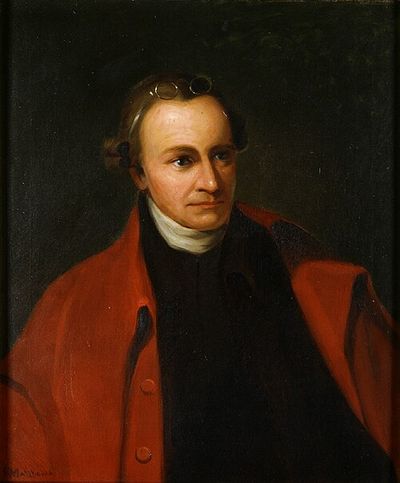
Henry spoke without notes, and nobody recorded the speech. The text everyone quotes first appeared in 1817, in a biography by the lawyer William Wirt, who had never heard Henry speak. Wirt gathered recollections from men who had been present, especially the judge St. George Tucker, and shaped them into a polished oration. Some historians think Wirt and Tucker contributed much of the wording; others think the famous ending, at least, reflects what listeners remembered. What nobody disputes is that Henry made a stirring case for armed resistance that day.
The line has another uncomfortable side. Henry, like many leaders of the Revolution, enslaved people, and the speech’s language of “chains and slavery” describes the colonists’ relationship with Britain, not the bondage of the people he held.
How to quote it
The line is safe to use as Patrick Henry’s famous cry, and it remains one of the best-known sentences of the Revolution. In an essay, it is worth adding that the text comes from Wirt’s 1817 reconstruction; that small note shows real understanding of the source.
What people get wrong
A word-for-word record of what Patrick Henry said in 1775.
A version reconstructed decades later from listeners' memories. The idea and the occasion are real; the exact words are uncertain.
Timeline
- March 23, 1775Henry speaks at the Second Virginia Convention, meeting in St. John's Church in Richmond, in favor of raising a militia. No written text is made.
- April 19, 1775Fighting breaks out between British troops and colonial militia at Lexington and Concord in Massachusetts.
- 1817William Wirt publishes a biography of Henry with the full speech, reconstructed from the recollections of men who had been there, including the judge St. George Tucker.
- TodayHistorians accept that Henry gave a powerful speech for armed resistance, but treat the exact wording as Wirt's reconstruction.
Use it in a speech
Questions people ask
Did Patrick Henry really say “give me liberty, or give me death”?
He gave a famous speech on March 23, 1775, urging Virginia to arm, but no one wrote it down at the time. The text we know was reconstructed by William Wirt in 1817 from the memories of people who heard it, so the exact words are uncertain.
Where did Patrick Henry give the speech?
At St. John's Church in Richmond, Virginia, where the Second Virginia Convention was meeting.
What was the speech about?
Henry argued that peaceful petitions to Britain had failed and that Virginia should raise and arm a militia to defend itself.
Cite this quote
These cite the original source directly, so you can use them in an essay or paper. Always check your teacher's required style.