The exact words
Where the story really comes from
In the first part of his Confessions, written in the second half of the 1760s, the philosopher Jean-Jacques Rousseau recalls an episode from his youth. He wanted some bread to go with his wine but felt too well dressed to walk into a baker’s shop. He then remembered “the makeshift of a great princess” who, told that the peasants had no bread, replied “Qu’ils mangent de la brioche,” let them eat brioche. Rousseau does not name the princess, and he was telling the story as a joke against himself.
Rousseau wrote this section around 1765 to 1769, when Marie Antoinette was a child in Vienna, the youngest daughter of the Austrian empress Maria Theresa. She did not arrive in France until 1770. Whoever the “great princess” was, if she existed at all, she was not the future queen. Versions of the story had in fact been told about other royal women.
How it became hers
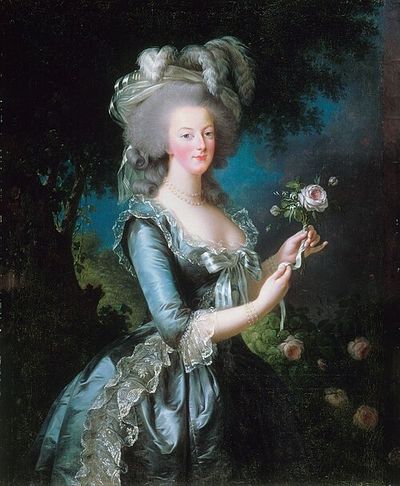
Marie Antoinette was deeply unpopular in France. She was foreign, she spent heavily, and pamphleteers spread scandalous stories about her. The brioche story fit that image perfectly, and in the nineteenth century, long after her execution in 1793, it became firmly attached to her. Her biographer Antonia Fraser has pointed out that she was in fact known for charitable giving and wrote with sympathy about the hardships of the poor.
How to use it
The line is a perfect example of how a quote can become a weapon. In writing, mention Rousseau and the brioche; it turns a cliché into an interesting fact. In conversation, “let them eat cake” will always mean the same thing, but it is worth knowing the queen who supposedly said it was likely innocent of this particular remark.
What people get wrong
Marie Antoinette's heartless reply to starving Parisians.
An old anecdote about an unnamed princess, recorded by Rousseau when Marie Antoinette was a child in Austria. The French word was brioche, an enriched bread, not cake.
Timeline
- c. 1765–1769Rousseau writes the first part of his Confessions, recalling a story about “a great princess” who suggested the poor eat brioche.
- 1770Marie Antoinette, aged fourteen, arrives in France to marry the future Louis XVI.
- 1782The first part of the Confessions is published after Rousseau's death.
- 1793Marie Antoinette is executed. Hostile pamphlets had long painted her as heartless and extravagant.
- 19th centuryThe story becomes firmly attached to her name.
Use it in a speech
Questions people ask
Did Marie Antoinette say “let them eat cake”?
There is no evidence she did. The story appears in Jean-Jacques Rousseau's Confessions, about an unnamed “great princess,” in a section written in the late 1760s, when Marie Antoinette was about ten and living in Austria.
Is it “cake” or “brioche”?
The French original is “Qu'ils mangent de la brioche,” brioche being a rich bread made with eggs and butter. “Cake” is a loose English translation.
Why is it linked to Marie Antoinette?
She was the target of vicious propaganda before and during the French Revolution, and the story fit the image of a queen indifferent to the poor. Later writers made the connection permanent.
Cite this quote
Don't cite this line as Marie Antoinette's words. There is no reliable source showing they said it. The real source is Jean-Jacques Rousseau, Confessions, so cite that instead. If you need to mention it, say it is “often attributed to Marie Antoinette” and, if you want a reference, cite this page:
Sources
- Jean-Jacques Rousseau, Les Confessions, Book VI. Project Gutenberg (French and English editions).
- Antonia Fraser, Marie Antoinette: The Journey (2001).