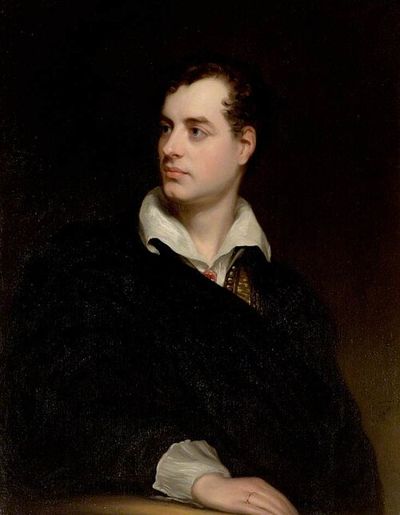
The exact words
“She walks in Beauty, like the night Of cloudless climes and starry skies; And all that's best of dark and bright Meet in her aspect and her eyes: Thus mellowed to that tender light Which Heaven to gaudy day denies.”Lord Byron, She Walks in Beauty, stanza 1, Hebrew Melodies (1815)
✓ VerifiedFound in a primary source: the original book, speech transcript, letter or recording.
What people get wrong
Common reading
A love poem to a woman Byron was courting.
A love poem to a woman Byron was courting.
Closer to the original
Byron had only just met her, and she was married. The poem admires rather than pursues, and its last stanza praises her goodness and “a heart whose love is innocent.” That is part of why it works so well at weddings.
Byron had only just met her, and she was married. The poem admires rather than pursues, and its last stanza praises her goodness and “a heart whose love is innocent.” That is part of why it works so well at weddings.
Timeline
- June 1814According to Byron's friend James Wedderburn Webster, the poem was written the morning after a party where Byron first saw his cousin by marriage, Anne Beatrix Wilmot, who was in mourning and wore a black dress set with spangles.
- 1815The poem opens Hebrew Melodies, a set of lyrics Byron wrote to be sung to traditional Jewish tunes arranged by the composer Isaac Nathan. Despite the title, it has nothing to do with the Bible.
- TodayIt is one of the most-read love poems in English and a frequent wedding reading.
Use it in a speech
Byron wrote, “She walks in beauty, like the night of cloudless climes and starry skies.” Today, everyone in this room can see exactly what he meant.
~9 secondsto say aloud
Pauseafter “starry skies”
Best spotthe toast to the bride
You walk in beauty, like the night of cloudless climes and starry skies. Byron said it first, but he never met you.
~7 secondsto say aloud
Pausenone needed in a card
Best spotthe whole card
Byron wrote that all that's best of dark and bright meet in her aspect and her eyes. After all these years, I still see both in you.
~8 secondsto say aloud
Pauseafter “her eyes”
Best spotthe closing line of the toast
Questions people ask
Who wrote “She walks in beauty, like the night”?
Lord Byron, in 1814. It was published in Hebrew Melodies in 1815.
Who was the poem about?
Traditionally, Anne Beatrix Wilmot, the wife of Byron's cousin Robert Wilmot, whom Byron saw at a party while she was in mourning.
Cite this quote
These cite the original source directly, so you can use them in an essay or paper. Always check your teacher's required style.
MLAByron, Lord. “She Walks in Beauty.” 1814. Project Gutenberg, www.gutenberg.org/ebooks/21811.
APAByron, L. (1814). She Walks in Beauty. Project Gutenberg. https://www.gutenberg.org/ebooks/21811
CHICAGOLord Byron, “She Walks in Beauty,” 1814.
IN TEXT (APA)(Byron, 1814)