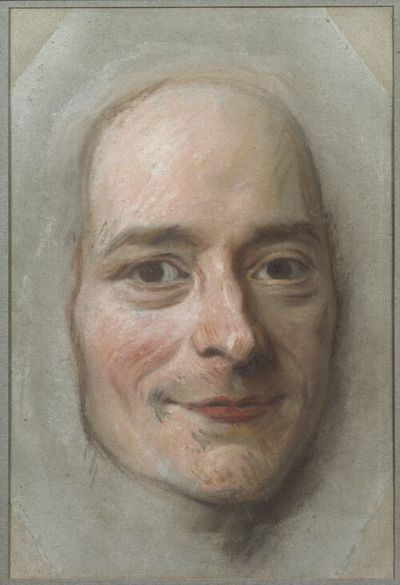
The exact words
“Je n'ai que vingt arpents, répondit le Turc; je les cultive avec mes enfants; le travail éloigne de nous trois grands maux, l'ennui, le vice, et le besoin.”Voltaire, Candide, ou l'optimisme, Chapter 30 (1759)
✓ VerifiedFound in a primary source: the original book, speech transcript, letter or recording.
What people get wrong
Common reading
Voltaire's personal rule about work.
Voltaire's personal rule about work.
Closer to the original
Voltaire gives the line to a humble old farmer, and it is the answer the whole novel has been looking for. After every grand philosophy fails, simple shared work is what makes life bearable. The English wording varies by translation, for example “weariness, vice, and want.”
Voltaire gives the line to a humble old farmer, and it is the answer the whole novel has been looking for. After every grand philosophy fails, simple shared work is what makes life bearable. The English wording varies by translation, for example “weariness, vice, and want.”
Timeline
- 1759Voltaire publishes Candide, a satire in which the hero suffers war, earthquake, shipwreck and robbery while his tutor insists that all is for the best.
- Chapter 30Near Constantinople, Candide meets an old Turk who lives contentedly on twenty acres. Asked about his estate, the farmer says that the work he and his children do keeps away boredom, vice and need.
- Last lineInspired, Candide ends the book with “il faut cultiver notre jardin,” “we must cultivate our garden.”
Use it in a speech
In Candide, an old farmer says work keeps away three great evils: boredom, vice and need. You've earned your rest, but knowing you, you'll find a garden to cultivate by Monday.
~11 secondsto say aloud
Pauseafter “vice and need”
Best spotthe closing joke
Voltaire's answer to philosophical optimism comes from an old farmer, not a philosopher: work, he says, keeps away “three great evils, boredom, vice, and need.”
~9 secondsto say aloud
Pausenone needed in writing
Best spotopening of the conclusion
Questions people ask
Who said “work keeps at bay three great evils”?
An old Turkish farmer in the last chapter of Voltaire's novel Candide (1759).
What are the three evils?
Boredom (l'ennui), vice (le vice) and need or poverty (le besoin).
Cite this quote
These cite the original source directly, so you can use them in an essay or paper. Always check your teacher's required style.
MLAVoltaire. Candide. Chapter 30. 1759. Project Gutenberg, www.gutenberg.org/ebooks/4650.
APAVoltaire. (1759). Candide. Project Gutenberg. https://www.gutenberg.org/ebooks/4650
CHICAGOVoltaire, Candide, Chapter 30, 1759.
IN TEXT (APA)(Voltaire, 1759)