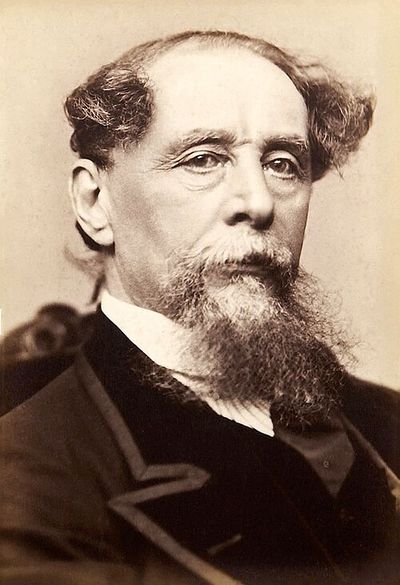
The exact words
“Annual income twenty pounds, annual expenditure nineteen nineteen and six, result happiness. Annual income twenty pounds, annual expenditure twenty pounds ought and six, result misery. The blossom is blighted, the leaf is withered, the god of day goes down upon the dreary scene, and—and in short you are for ever floored. As I am!”Charles Dickens, David Copperfield, Chapter 12
✓ VerifiedFound in a primary source: the original book, speech transcript, letter or recording.
What people get wrong
Common reading
A dry money tip.
A dry money tip.
Closer to the original
It is a joke with pain behind it. Micawber gives this advice from experience, just after his time in debtors' prison, and Dickens is remembering his own father. In old money, “nineteen nineteen and six” is 19 pounds, 19 shillings and 6 pence, just sixpence under twenty pounds.
It is a joke with pain behind it. Micawber gives this advice from experience, just after his time in debtors' prison, and Dickens is remembering his own father. In old money, “nineteen nineteen and six” is 19 pounds, 19 shillings and 6 pence, just sixpence under twenty pounds.
Timeline
- 1824Dickens's own father, John Dickens, is jailed for debt in the Marshalsea prison in London. Twelve-year-old Charles is sent to work in a blacking factory.
- 1849–1850Dickens publishes David Copperfield in monthly parts. Mr Micawber, the cheerful, always-broke lodger who gives young David this advice, is widely seen as a portrait of his father.
- TodayEconomists and personal finance writers call it “Micawber's principle” or “the Micawber rule.”
Use it in a speech
Mr Micawber had the whole of personal finance in two sentences: income twenty pounds, spending nineteen nineteen and six, result happiness. Spending twenty pounds and six, result misery. The difference is sixpence.
~12 secondsto say aloud
Pausebefore “The difference is sixpence”
Best spotthe practical advice section
Dickens's Micawber reduces budgeting to a single sixpence: just under your income is “happiness,” just over is “misery.”
~7 secondsto say aloud
Pausenone needed in writing
Best spotopening line
Questions people ask
What is the Micawber principle?
The rule, from Dickens's David Copperfield, that spending slightly less than you earn brings happiness and spending slightly more brings misery.
What does “nineteen nineteen and six” mean?
19 pounds, 19 shillings and 6 pence in old British money, which is sixpence less than 20 pounds.
Cite this quote
These cite the original source directly, so you can use them in an essay or paper. Always check your teacher's required style.
MLADickens, Charles. David Copperfield. Chapter 12. 1850. Project Gutenberg, www.gutenberg.org/ebooks/766.
APADickens, C. (1850). David Copperfield. Project Gutenberg. https://www.gutenberg.org/ebooks/766
CHICAGOCharles Dickens, David Copperfield, Chapter 12, 1850.
IN TEXT (APA)(Dickens, 1850)