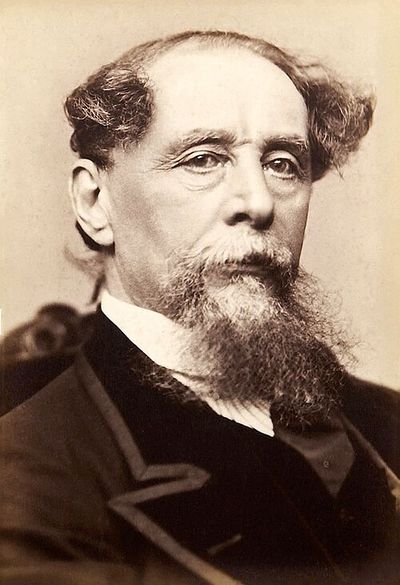
The exact words
““God bless us every one!” said Tiny Tim, the last of all.”Charles Dickens, A Christmas Carol, Stave 3 (“The Second of the Three Spirits”), 1843
✓ VerifiedFound in a primary source: the original book, speech transcript, letter or recording.
What people get wrong
Common reading
A sentimental greeting with no particular meaning.
A sentimental greeting with no particular meaning.
Closer to the original
In the story it lands hard because Tiny Tim may not live to the next Christmas. Dickens used the scene to make comfortable readers think about poor families, which is why Scrooge's change of heart starts at that table.
In the story it lands hard because Tiny Tim may not live to the next Christmas. Dickens used the scene to make comfortable readers think about poor families, which is why Scrooge's change of heart starts at that table.
Timeline
- December 1843Dickens publishes A Christmas Carol. In the Cratchit family's Christmas dinner scene, Bob Cratchit proposes a toast and Tiny Tim adds his blessing last of all.
- 1843The book closes with the narrator repeating the line, “And so, as Tiny Tim observed, God bless Us, Every One!”
- TodayThe line is one of the most quoted in Christmas cards, and Tiny Tim is shorthand for the poor children Dickens wanted his readers to remember.
Use it in a speech
Before we eat, let me borrow a line from Tiny Tim in A Christmas Carol. God bless us, every one. Especially the ones who cooked.
~7 secondsto say aloud
Pauseafter “every one”
Best spotjust before the meal
Dickens ends A Christmas Carol not with Scrooge but with Tiny Tim's blessing, “God bless us, every one,” handing the last word to the poorest child in the book.
~9 secondsto say aloud
Pausenone needed in writing
Best spotopening sentence
Questions people ask
Who says “God bless us, every one”?
Tiny Tim, the youngest Cratchit child, in Charles Dickens's A Christmas Carol (1843).
Is it the last line of A Christmas Carol?
Yes. The narrator ends the book with “And so, as Tiny Tim observed, God bless Us, Every One!”
Is it “everyone” or “every one”?
Dickens wrote two words, “every one,” meaning each single person.
Cite this quote
These cite the original source directly, so you can use them in an essay or paper. Always check your teacher's required style.
MLADickens, Charles. A Christmas Carol, Stave 3 and the closing. Line of Stave 5. 1843. Project Gutenberg, www.gutenberg.org/ebooks/46.
APADickens, C. (1843). A Christmas Carol, Stave 3 and the closing. Project Gutenberg. https://www.gutenberg.org/ebooks/46
CHICAGOCharles Dickens, A Christmas Carol, Stave 3 and the closing, Line of Stave 5, 1843.
IN TEXT (APA)(Dickens, 1843)