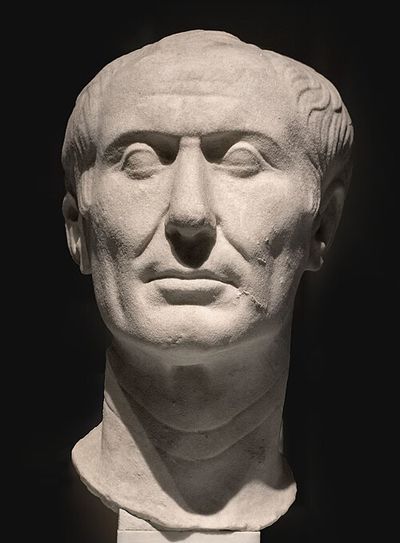
The exact words
“Et tu, Brute?—Then fall, Caesar!”William Shakespeare, Julius Caesar, Act 3, Scene 1 (first performed 1599)
✕ MisattributedSomeone else said or wrote it first; the famous name was attached later.
What people get wrong
Common reading
The real last words of Julius Caesar.
The real last words of Julius Caesar.
Closer to the original
No ancient source has Caesar say “et tu, Brute.” Suetonius thought he probably said nothing, and the version he reports as a rumor is in Greek and means “you too, child?” The Latin line is a later invention made famous by Shakespeare.
No ancient source has Caesar say “et tu, Brute.” Suetonius thought he probably said nothing, and the version he reports as a rumor is in Greek and means “you too, child?” The Latin line is a later invention made famous by Shakespeare.
Timeline
- 15 March 44 BCJulius Caesar is stabbed to death by a group of senators that includes Marcus Brutus, a man he had pardoned and favored.
- c. AD 121Suetonius writes that Caesar died with a groan and no words, but adds that some said he spoke to Brutus in Greek, “kai su, teknon?”, meaning “you too, child?”
- 1599Shakespeare's Julius Caesar gives Caesar the Latin line “Et tu, Brute?” The Latin tag had already appeared in English writing a few years earlier, but Shakespeare made it famous.
Use it in a speech
“Et tu, Brute?” may be the most famous last words never spoken: no Roman source records them, yet Shakespeare made them the universal cry of the betrayed.
~9 secondsto say aloud
Pausenone needed in writing
Best spotopening sentence
Questions people ask
What does et tu, Brute mean?
“And you, Brutus?” or “You too, Brutus?” It expresses shock that a close friend has joined your enemies.
Did Julius Caesar say et tu, Brute?
There is no evidence he did. The ancient biographer Suetonius says Caesar died silently, though some claimed he said “you too, child?” in Greek to Brutus.
Who wrote et tu, Brute?
It is best known from Shakespeare's play Julius Caesar, Act 3, Scene 1, written in 1599.
How do you pronounce it?
“Et too, BROO-tay.” Brute is the Latin form used when speaking to Brutus directly.
Cite this quote
Don't cite this line as Julius Caesar's words. There is no reliable source showing they said it. The real source is William Shakespeare, Julius Caesar, Act 3, Scene 1, so cite that instead. If you need to mention it, say it is “often attributed to Julius Caesar” and, if you want a reference, cite this page:
MLA“Et tu, Brute: Meaning and Origin.” QuoteDecoded, 2026, quotedecoded.com/quotes/et-tu-brute/.