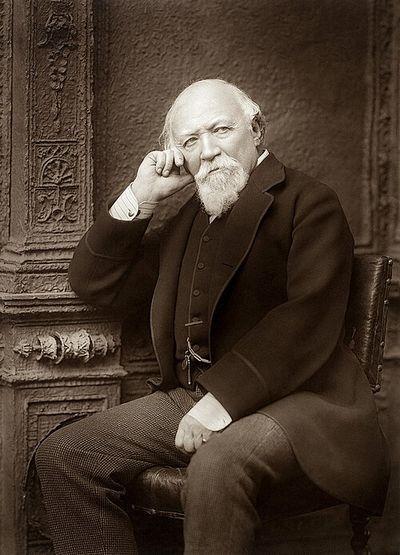
The exact words
“Grow old along with me! The best is yet to be, The last of life, for which the first was made.”Robert Browning, “Rabbi Ben Ezra,” stanza 1, Dramatis Personae (1864)
✓ VerifiedFound in a primary source: the original book, speech transcript, letter or recording.
What people get wrong
Common reading
A romantic promise between two lovers.
A romantic promise between two lovers.
Closer to the original
In the poem the old rabbi is speaking about life and faith, not a marriage. Its message is that youth is only half the plan and age completes it. Couples borrowed it later, and it suits them well.
In the poem the old rabbi is speaking about life and faith, not a marriage. Its message is that youth is only half the plan and age completes it. Couples borrowed it later, and it suits them well.
Timeline
- 12th centuryAbraham ibn Ezra, a Jewish poet and scholar from Spain, lives and writes. Browning uses him as the voice of the poem.
- 1864Browning publishes “Rabbi Ben Ezra” in Dramatis Personae, three years after the death of his wife, Elizabeth Barrett Browning.
- TodayThe opening lines are among the most popular for anniversary cards and wedding readings.
Use it in a speech
Robert Browning wrote, grow old along with me, the best is yet to be. Thirty years in, I'm still taking him at his word. Happy anniversary.
~8 secondsto say aloud
Pauseafter “the best is yet to be”
Best spotthe anniversary toast or card
Browning said the best is yet to be, the last of life, for which the first was made. Happy birthday. Here's to the best part.
~8 secondsto say aloud
Pausenone needed in a card
Best spota milestone birthday card
Robert Browning wrote, grow old along with me, the best is yet to be. Today you start doing exactly that. To the bride and groom.
~8 secondsto say aloud
Pauseafter “the best is yet to be”
Best spotthe closing toast
Questions people ask
Who wrote “Grow old along with me, the best is yet to be”?
Robert Browning, in the first lines of his poem “Rabbi Ben Ezra” (1864).
Is it a love poem?
Not originally. It is a reflection on aging and faith spoken by a medieval rabbi, though it is now often used at weddings and anniversaries.
Cite this quote
These cite the original source directly, so you can use them in an essay or paper. Always check your teacher's required style.
MLABrowning, Robert. ““Rabbi Ben Ezra,” Dramatis Personae.” 1864. Project Gutenberg, www.gutenberg.org/ebooks/16376.
APABrowning, R. (1864). “Rabbi Ben Ezra,” Dramatis Personae. Project Gutenberg. https://www.gutenberg.org/ebooks/16376
CHICAGORobert Browning, ““Rabbi Ben Ezra,” Dramatis Personae,” 1864.
IN TEXT (APA)(Browning, 1864)