The exact words
What Roosevelt meant
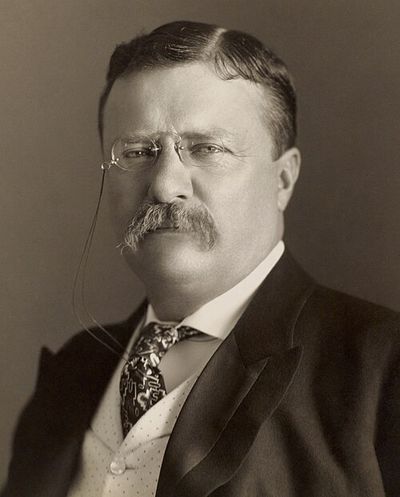
The phrase first appears in a letter Roosevelt wrote in January 1900, when he was governor of New York. He was describing how he had handled Thomas Platt, the powerful boss of the state Republican Party, who wanted to control appointments. Roosevelt had been courteous and friendly in private, but he had also made clear that he was willing to go public and fight. Speaking softly kept the relationship workable; the stick made sure he got his way.
As president, Roosevelt applied the same idea to foreign affairs. He built up the U.S. Navy, sent it around the world as the “Great White Fleet,” and used the threat of force in the Caribbean and Central America, most notably in the events that led to the Panama Canal. Critics saw the “big stick” as bullying of smaller countries. Roosevelt saw it as the only way to make diplomacy credible. He also won the Nobel Peace Prize in 1906 for mediating an end to the Russo-Japanese War, which is the “speak softly” half in action.
The mysterious proverb
Roosevelt called the saying a “West African proverb,” and he repeated that description. Researchers have looked for it in collections of West African sayings and have not found it. Roosevelt read widely and may have encountered something similar, or he may have adopted the label to give a homely phrase extra authority. Either way, the words in their famous form are his.
How people use it today
The phrase is used in politics, business and sport for quiet confidence backed by real ability. Its best use keeps both halves in balance: the point is not to brandish the stick but to have it, so that you rarely need to.
What people get wrong
A recommendation to threaten people quietly.
A rule for negotiation backed by strength. Roosevelt stressed the “speak softly” half as much as the stick, meaning courtesy and restraint as long as real power stood behind them.
Timeline
- January 26, 1900As governor of New York, Roosevelt uses the phrase in a letter about his dealings with the state's Republican party boss.
- September 2, 1901As vice president, he repeats it in a speech at the Minnesota State Fair. Four days later President McKinley is shot.
- 1901–1909As president, Roosevelt's approach to foreign affairs becomes known as “Big Stick diplomacy.”
- 1907–1909The “Great White Fleet” of American battleships sails around the world, a showcase of the big stick.
Use it in a speech
Questions people ask
Who said “speak softly and carry a big stick”?
Theodore Roosevelt, first in a letter of January 26, 1900, and then in a speech in Minnesota in September 1901. He called it a West African proverb.
Is it really a West African proverb?
No matching West African proverb has been found by researchers. Roosevelt may have heard a version somewhere, misremembered its source, or simply liked the label.
What is “Big Stick diplomacy”?
The name given to Roosevelt's foreign policy as president, combining negotiation with a visible willingness to use military power, especially the U.S. Navy, in places like Latin America.
Cite this quote
These cite the original source directly, so you can use them in an essay or paper. Always check your teacher's required style.