William Shakespeare
English playwright and poet, 1564–1616. 13 explained quotes.
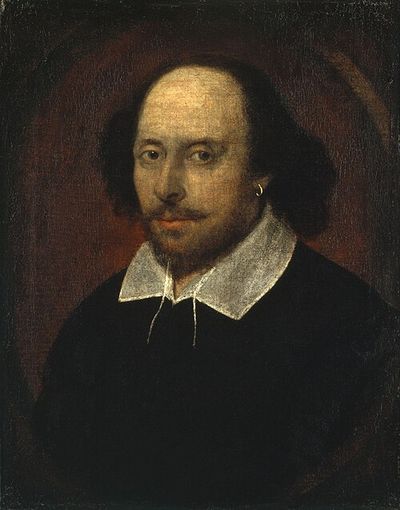
The melancholy Jaques compares life to a play in seven acts, from baby to old age. It is a witty, gloomy view of life that the play quietly answers.
Read the full explanation →Polonius declares that being brief is the essence of intelligence, in the middle of one of the longest-winded speeches in the play. “Wit” meant good sense, not just humor.
Read the full explanation →Caesar tells his wife that cowards suffer death over and over in their fears, while the brave face it only once. He says it on the morning he is murdered.
Read the full explanation →A joke turned into a proverb: even a father may not truly know his child. Shakespeare reverses the older saying that it is a wise child who knows its own father.
Read the full explanation →Shakespeare defines true love as constant: it does not change when circumstances change, and it does not fade with time or age.
Read the full explanation →Don't borrow money and don't lend it, because a loan can cost you both the money and the friend, and borrowing makes you careless with what you have.
Read the full explanation →Richard says the winter of the family's unhappiness has been turned into glorious summer by his brother, King Edward IV. The famous half-line is usually quoted as if it meant the opposite.
Read the full explanation →Juliet asks why Romeo has to be a Montague, the son of her family's enemy. “Wherefore” means “why,” not “where.”
Read the full explanation →The poet decides the beloved is better than a summer's day, which is too short and changeable, and promises that the poem itself will keep their beauty alive forever.
Read the full explanation →Lysander comforts Hermia, whose father forbids their marriage, by saying true love has always faced obstacles. It is a promise that trouble does not mean love is false.
Read the full explanation →Watching a play, Queen Gertrude says the actress playing a queen promises too much love and loyalty to be believed. “Protest” meant “vow,” not “object.”
Read the full explanation →Polonius's parting advice to his son Laertes: be honest with yourself, and you will be honest with others. It is good advice from a character who rarely follows it.
Read the full explanation →Hamlet asks whether it is better to live and endure life's suffering or to die and end it, and concludes that fear of what comes after death keeps people going.
Read the full explanation →No quotes match these filters yet. New quotes are added every week.
About William Shakespeare
William Shakespeare was born in Stratford-upon-Avon, became an actor and shareholder in a London theatre company, and wrote around 37 plays and 154 sonnets. His work was collected after his death in the First Folio of 1623.
No writer has given English more everyday phrases. Many lines people know from Shakespeare are spoken by characters who are foolish, scheming or wrong, so on this site we always say who is speaking and why, because it often changes the meaning.
More lines by Shakespeare
Short quotes checked against their sources.
- “Be not afraid of greatness: some are born great, some achieve greatness, and some have greatness thrust upon 'em.”Twelfth Night, Act 2, Scene 5, 1602
- “The fault, dear Brutus, is not in our stars, but in ourselves, that we are underlings.”Julius Caesar, Act 1, Scene 2, 1599
- “Love all, trust a few, do wrong to none.”All's Well That Ends Well, Act 1, Scene 1, 1605
- “We know what we are, but know not what we may be.”Hamlet, Act 4, Scene 5, 1600