The exact words
The original line
The saying comes from chapter 64 of the Tao Te Ching (Daodejing), the short classic of Taoist philosophy traditionally credited to Laozi. In Chinese it reads “千里之行,始於足下” (qiān lǐ zhī xíng, shǐ yú zú xià). Translated literally: “a journey of a thousand li starts beneath one’s feet.” A li is a traditional unit of distance, so “a thousand li” simply means a very long way.
The familiar English, “begins with a single step,” is a free translation that goes back to Victorian versions such as James Legge’s. The original image is slightly different and arguably richer: the journey starts beneath your feet, from exactly where you are standing now.
What the passage means
The line is part of a series of images about how large things grow from small beginnings: “The tree which fills the arms grew from the tiniest sprout; the tower of nine storeys rose from a small heap of earth.” The chapter opens with the advice behind them. In James Legge’s 1891 translation: “Action should be taken before a thing has made its appearance; order should be secured before disorder has begun.” Legge, interestingly, rendered the journey line as “commenced with a single step.” Great accomplishments and great disasters alike start with something tiny.
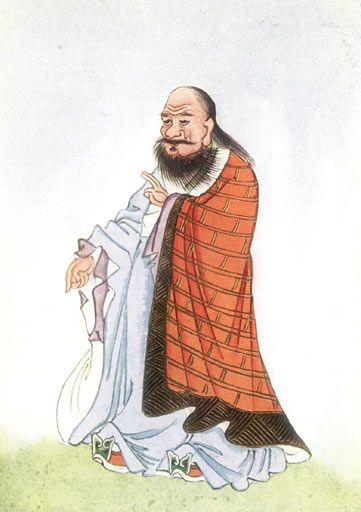
Laozi himself is a legendary figure. Tradition makes him an archivist at the royal court of Zhou in the sixth century BC, but most historians think the Tao Te Ching was compiled later, around the fourth century BC, perhaps from several sources. Bamboo-slip copies found in 1993 at Guodian, in a tomb dated to about 300 BC, include parts of the text, among them a version of this chapter.
How to use it
The line works for any beginning: a graduation, a new project, a long season. Mentioning that the original says “beneath your feet” gives it a fresh, concrete image for an audience that has heard it many times.
What people get wrong
An exact quote about taking a first step.
The original says the journey starts “beneath one's feet,” right where you stand. It is part of a passage about dealing with things while they are still small.
Timeline
- 6th century BC (tradition)Chinese tradition says Laozi, an archivist at the Zhou court, wrote the Tao Te Ching before leaving China.
- c. 4th century BCThe text is compiled, according to most historians. Chapter 64 contains the line about the journey of a thousand li.
- 1993Bamboo-slip copies found at Guodian, in a tomb from around 300 BC, include a version of chapter 64.
- TodayThe English “a journey of a thousand miles begins with a single step” is one of the most quoted lines from Chinese philosophy.
Use it in a speech
Questions people ask
Who said “A journey of a thousand miles begins with a single step”?
It comes from chapter 64 of the Tao Te Ching, traditionally credited to the Chinese philosopher Laozi (Lao Tzu).
What does the original Chinese say?
“千里之行,始於足下” (qiān lǐ zhī xíng, shǐ yú zú xià), literally “a journey of a thousand li starts beneath one's feet.” A li is a traditional Chinese unit of distance, about a third of a mile.
What does it mean?
Big achievements grow from small, immediate actions. The surrounding passage advises handling things while they are still small and easy.
Cite this quote
These cite the original source directly, so you can use them in an essay or paper. Always check your teacher's required style.