The exact words
What survives of Heraclitus
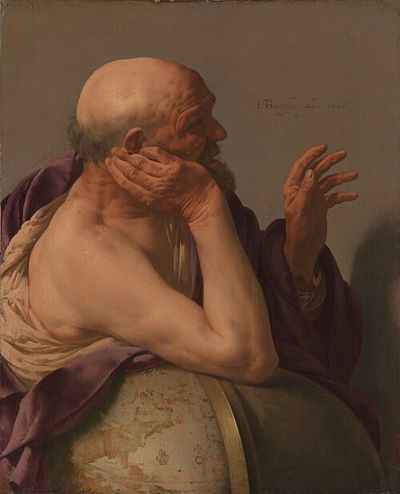
Heraclitus lived around 500 BC in Ephesus, a Greek city on the coast of what is now Turkey. He wrote a book, which is lost. What we have are about a hundred short fragments that later authors quoted, often to argue with him, so even his most famous idea reaches us secondhand. In ancient times he was nicknamed “the obscure” for his riddling style.
The river idea appears in three forms. One fragment, preserved by the later writer Arius Didymus, says: “Upon those who step into the same rivers, different and again different waters flow.” Plato, in his dialogue Cratylus, summarizes Heraclitus as saying that everything moves and nothing stays still, and that “you could not step twice into the same river.” Plutarch, writing around 100 AD, quotes him: “It is not possible to step twice into the same river.”
What it means
The point is that the world is in constant flux. A river keeps its name and its banks, but the water is always new; it is a pattern, not a fixed thing. Heraclitus thought everything was like that. Interestingly, the oldest fragment suggests something subtler than “nothing stays the same”: the river is still the same river precisely because its waters keep changing. Identity, for Heraclitus, depends on change.
The popular expanded version, “for it’s not the same river and he’s not the same man,” is a modern addition, but it captures the idea that the person changes too.
How to use it
The line is a natural fit for graduations, retirements and moves, any moment when a familiar place is about to become different. In writing, credit it as “a saying attributed to Heraclitus” or quote one of the fragments directly.
What people get wrong
An exact quote from Heraclitus, including the ending “for it's not the same river and he's not the same man.”
The surviving fragments are shorter and stranger. The second half about the man changing is a modern addition, though it fits Heraclitus's thinking.
Timeline
- c. 500 BCHeraclitus writes a book in Ephesus. It is lost; only about a hundred short fragments survive in later writers' quotations.
- 4th century BCPlato, in the Cratylus, reports that Heraclitus said “you could not step twice into the same river.”
- c. 100 ADPlutarch quotes Heraclitus: “It is not possible to step twice into the same river.”
- TodayThe idea is summarized as “No man ever steps in the same river twice, for it's not the same river and he's not the same man,” a modern expansion.
Use it in a speech
Questions people ask
Did Heraclitus say “No man ever steps in the same river twice”?
Not in exactly those words. His book is lost. Plato reports him saying you cannot step twice into the same river, and Plutarch quotes a similar line. A third fragment says different waters flow over those who step into the same rivers.
What does it mean?
That everything is constantly changing. The river looks the same, but its water is always new, and the person stepping in has changed too.
Is “and he's not the same man” part of the original?
No. That ending is a modern expansion that spells out the idea.
Cite this quote
These cite the original source directly, so you can use them in an essay or paper. Always check your teacher's required style.